Protection and Auspiciousness: In traditional beliefs, jade (e.g., jadeite, nephrite) is thought to ward off evil spirits and ensure safety, often worn as a protective amulet.
Health Symbolism: In traditional Chinese medicine (TCM) theories, jade is believed to promote blood and qi circulation (via subtle friction with the skin), though direct scientific evidence is lacking.
Moral Symbolism: Jade’s gentle, refined appearance is culturally associated with virtues like humility and integrity, earning it the title of “gentleman’s stone.”
Energy Field Concepts: Some cultures associate specific crystals with particular energies (e.g., rose quartz for love, amethyst for focus), though these claims are metaphysical and scientifically unproven.
Chakra Balancing: In systems like Ayurveda, crystals are believed to resonate with the body’s energy centers (chakras), falling under traditional mind-body practices.
II. Psychological and Emotional Value
Placebo Effect
Wearers may feel calm or confident due to belief in the bracelet’s symbolism (e.g., green aventurine for wealth), akin to a placebo response.
Emotional Regulation
From a color psychology perspective: Soothing hues (e.g., aquamarine’s blue) may offer visual relaxation, indirectly reducing stress.
III. Decorative and Social Functions
Aesthetic Appeal
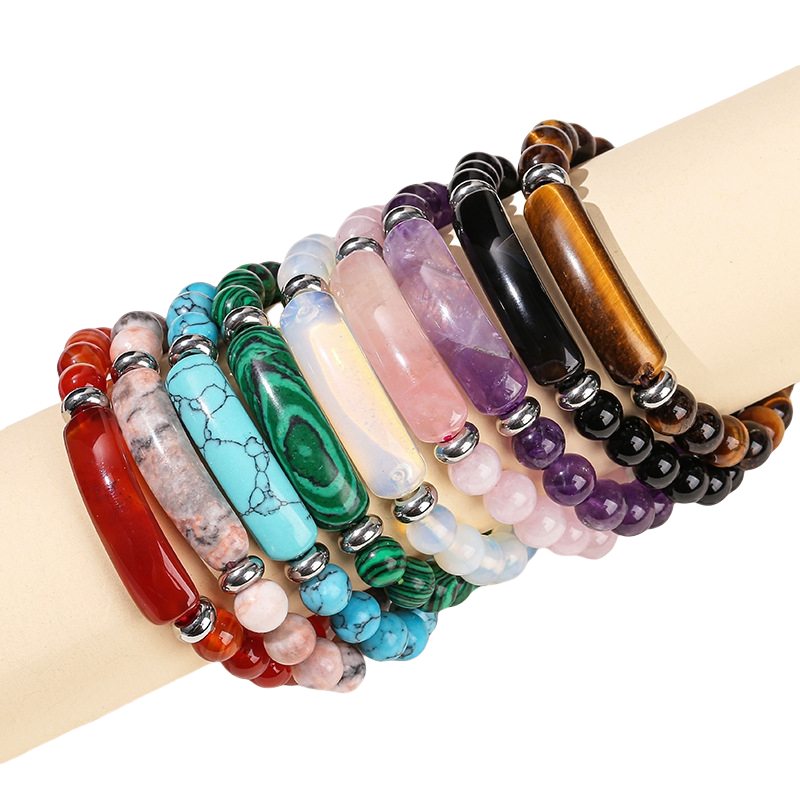
Natural patterns and luster make these bracelets versatile accessories for daily wear or special occasions.
Personal Expression
Materials and colors reflect individual style (e.g., black obsidian for edginess, rose quartz for softness).
Social Interaction
Cultural symbolism makes them popular gifts (e.g., amethyst for wisdom) or conversation starters.
IV. Potential Physical Effects
Acupressure Stimulation
Rolling beads may lightly massage wrist acupoints (e.g., Neiguan point), though effects vary by individual.
Temperature Properties
Jade’s cool texture may provide a refreshing sensation in hot weather.