

When choosing a suitcase, you can consider the following aspects:
I. Suitcase Material
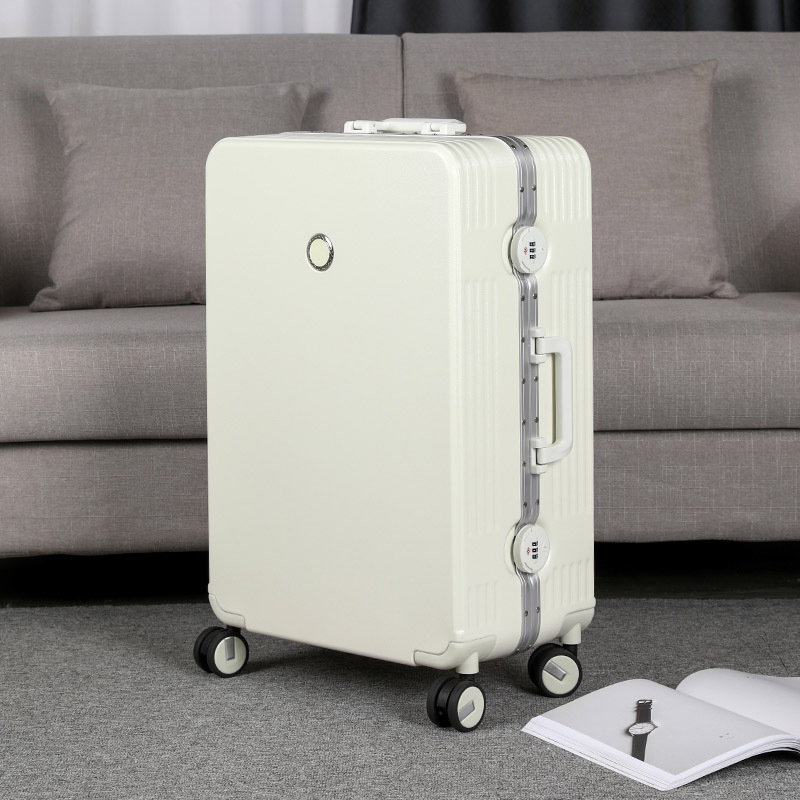
Hard-sided suitcases: Mainly made of ABS, PC, magnesium-aluminum alloy, etc.
- ABS Material: Inexpensive, rigid, and fairly abrasion-resistant, but with poor toughness and resilience, prone to damage.
- PC Material: Highly flexible, collision-resistant, outstanding impact resistance, and lightweight, especially high-quality German Covestro PC material.
- Magnesium-Aluminum Alloy: Hard, drop-resistant, fireproof, oxidation-resistant, but expensive, with poor elasticity, heavy, and prone to deformation after rough handling.
- ABS+PC Material: A compromise between ABS and PC, combining the advantages of both but with less durability than pure PC.
Soft-sided suitcases: Mainly made of nylon, Oxford cloth, canvas, genuine leather, PU leather, EVA+leather surface/leather, etc.
- Nylon: High elasticity, waterproof, and scratch-resistant.
- Oxford Cloth: Lightweight, durable, commonly used for outdoor suitcases.
- Canvas: Lightweight, durable, with waterproof properties.
- Genuine Leather: High durability and texture but expensive.
- PU Leather: Wear-resistant, easy to clean, and affordable.
- EVA+Leather Surface/Leather: Lightweight, with some stretch, and more capacious.
II. Size and Capacity
Choose a size that suits your needs. Generally, suitcases 20 inches or smaller do not require check-in and are suitable for trips of about 2-4 days; larger suitcases such as 24, 26, 28 inches, etc., are suitable for longer trips or when more items are needed.
When purchasing, pay attention to the specific size requirements of various airlines to ensure the suitcase can be carried on or checked in smoothly.

III. Wheels and Handle
Wheels: It is recommended to choose wheels made of TPU/TPE material, which are wear-resistant, elastic, shock-absorbing, and low-noise. There are double and single wheels for omnidirectional wheels, with eight-wheel (double-row) stability being better than four-wheel (single-row). For wheel bearings, steel bearings are superior to plastic bearings.
Handle: Prefer dual aluminum alloy or aluminum handles, which are smooth and rust-resistant. You can judge the quality of the handle by pressing it to see if it moves smoothly, if there is any hesitation, and by slightly shaking it.
IV. Locks and Closure Methods
Locks: There are two types of locks: regular locks and TSA customs locks. Regular locks are suitable for those without international travel needs; TSA customs locks are suitable for international travel, as customs has the right to force open suitcases without TSA locks during inspections.
Closure Methods: Mainly include zipper closures and aluminum frame buckle locks. Zipper closures are low-cost and lightweight; aluminum frame buckle locks are convenient to close, aesthetically pleasing, more durable, but may occupy some internal space in the suitcase.
V. Brand and Price
Brand: Choose well-known brands such as Samsonite, ITO, Diplomat, Level 8, JD ZAO, and Bromen, which typically offer better quality and after-sales service.
Price: Select a cost-effective suitcase within your budget. There’s no need to blindly pursue brands or high prices; what suits you best is the best.
VI. Other Details
Appearance: Choose wear-resistant materials and colors, such as matte materials that are more wear-resistant and scratch-resistant; bright colors are more eye-catching in a crowd, making it easier to find.
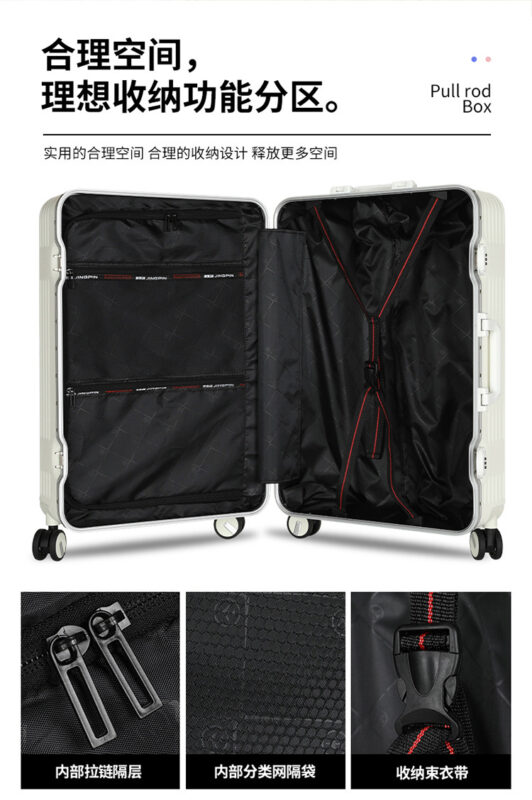
Interior Layout: Consider the partitioned design layout of the suitcase. It is best to purchase a suitcase with a wet-dry separation layout to prevent liquids inside the suitcase from spilling and affecting other items.
Expandable Layer: Some suitcases have an expandable layer to increase capacity as needed.
In summary, when choosing a suitcase, you need to consider multiple aspects such as suitcase material, size and capacity, wheels and handle, locks and closure methods, brand and price, as well as other details. By comprehensively considering these factors, you can select a suitcase that not only meets your needs but also offers high cost-effectiveness.