

The requirements for luggage imposed by airlines mainly include restrictions on size, weight, material, and other aspects. These regulations aim to ensure the safety of passengers and the normal operation of flights. The following is a detailed summary of the airline luggage requirements:
I. Size Requirements
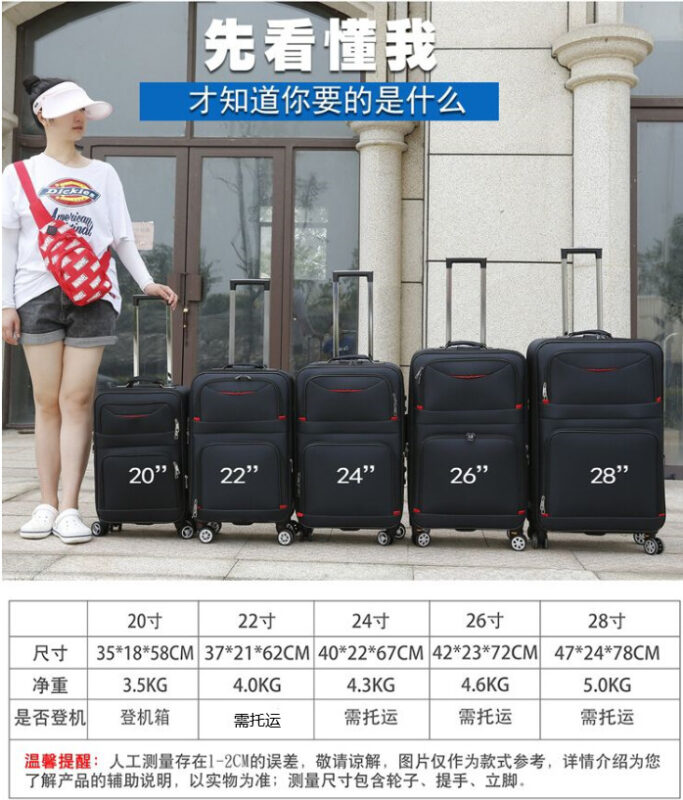
Carry-on Luggage
- International Flights: The sum of the three dimensions must not exceed 115 centimeters (some airlines may have slight variations, but generally follow this standard).
- Domestic Flights: Usually not exceeding 20×40×55 centimeters (or the sum of the three dimensions does not exceed 115 centimeters, specific dimensions may vary by airline).
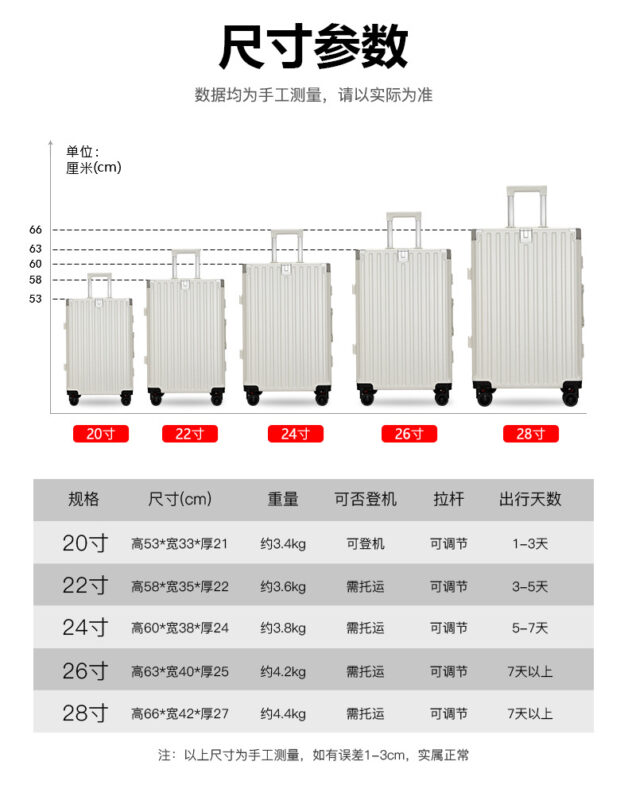
- Common carry-on luggage sizes include 16 inches, 18 inches, and 20 inches, with 20 inches being the most popular choice for short trips or business travel.
Checked Luggage
- International Flights: The sum of the three dimensions must not exceed 158 centimeters.
- Domestic Flights: It may be relaxed to 40×60×100 centimeters (or the sum of the three dimensions does not exceed a certain limit, specific values may vary by airline).
- Common checked luggage sizes include 22 inches, 24 inches, 26 inches, and 28 inches, suitable for medium to long-distance travel.
II. Weight Requirements
Carry-on Luggage
- Economy Class: Typically, each passenger can carry no more than 5 kilograms (some airlines, such as China Eastern Airlines, China Southern Airlines, Hainan Airlines, etc., have a hand luggage weight limit of 5-10 kilograms) of carry-on luggage.
- Business Class and First Class: Passengers may be allowed to carry slightly more weight, but generally not exceeding 7 kilograms, and first-class passengers may be allowed to carry two pieces of carry-on luggage.

Checked Luggage
- Economy Class: The weight limit for free checked luggage is usually 20 kilograms.
- Business Class: The weight limit for free checked luggage is usually 30 kilograms.
- First Class: The weight limit for free checked luggage is usually 40 kilograms.
- If the luggage exceeds the prescribed weight limit, the airline will charge additional fees for excess weight.
III. Material Requirements
Airlines do not have specific requirements for the material of luggage, but it is recommended that passengers choose durable, pressure-resistant, and impact-resistant materials, such as ABS, PC, aluminum-magnesium alloy, etc. These materials can protect luggage from damage during transportation.
IV. Other Considerations
Liquids and Cosmetics: Carry-on liquids must be in containers of 100 milliliters or less, with a total volume not exceeding 1000 milliliters. Liquids exceeding this limit need to be checked.
Special Items: For carrying valuables, fragile items, or liquids, it is recommended that passengers familiarize themselves with the airline’s relevant regulations in advance and take appropriate protective measures.
Overweight and Oversized Luggage: If the luggage exceeds the airline’s size or weight restrictions, it may be necessary to apply to the airline in advance and additional fees may be required. Some airlines may have special handling requirements for oversized luggage.
Luggage Tags: Attach name and contact information tags to the luggage so that passengers can be contacted promptly in case of lost or delayed luggage.
In summary, airline luggage requirements involve multiple aspects such as size, weight, and material. Passengers should familiarize themselves with the luggage regulations of the airline they are flying with in advance and arrange their luggage size and weight reasonably according to their cabin class and travel needs.