

Appearance Observation
Pores and Patterns: Genuine leather has clear pores and patterns on its surface, with different types of leather exhibiting distinct pore and pattern characteristics. For example, cowhide has relatively uniform fine pores, yak leather has coarse and sparse pores, and goat leather has fish scale-like pores. In contrast, synthetic leather usually lacks pores, and its patterns often appear unnatural.
Leather Surface Gloss: The surface of genuine leather has a natural gloss. When pressed or squeezed, the leather surface does not develop dead wrinkles or folds, nor does it crack. Synthetic leather may have an overly bright gloss, with overly vivid patterns and colors.
Section Observation: The cut surface of genuine leather is composed of irregular fibers, with no significant changes between the upper and lower layers. Synthetic leather, however, clearly shows layered materials like a layered cake.

Touch Experience
Touch Sensation: Genuine leather feels soft, delicate, full, and elastic. Synthetic or artificial leather may feel rough, stiff, and less flexible.
Wrinkle Test: When the leather is pressed with a finger, genuine leather will develop fine wrinkles that disappear immediately when the finger is lifted. Synthetic and artificial leather usually do not develop such wrinkles.
Odor Identification
Leather Odor: Genuine leather typically has a strong leather smell, which remains noticeable even after treatment. Synthetic leather may have a stronger, stimulating plastic odor.
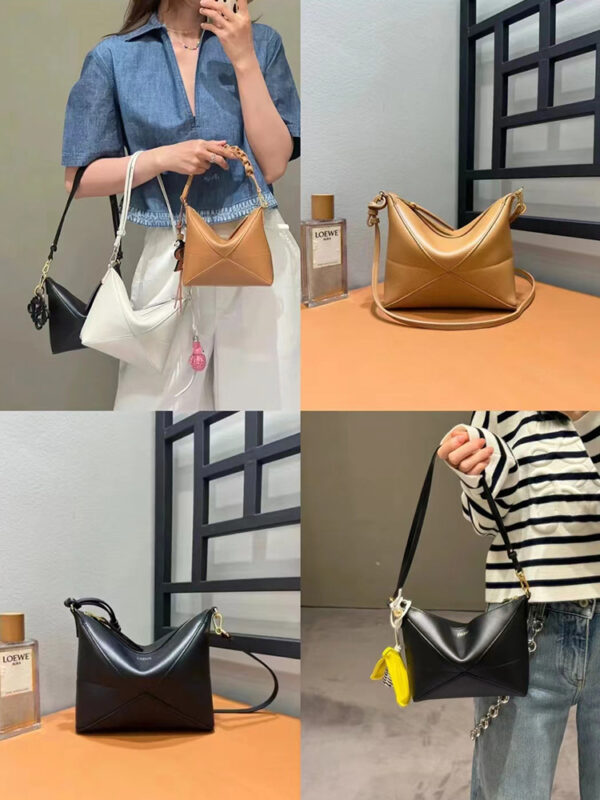
Physical Tests
Water Drop Test: Drop a few water drops on the bag and observe its absorbency. Genuine leather has good water absorbency, allowing water drops to penetrate the leather. Synthetic leather may not absorb water or have poor absorbency.
Blowing Test: Blow air onto the reverse side of the leather. If leakage appears on the front side, it indicates good air permeability, suggesting that it may be genuine leather. Synthetic leather usually has poor air permeability.
Tensile Strength and Elasticity Test: Pull the leather surface of the bag. If it feels elastic, it indicates genuine leather, as genuine leather has good elasticity and tensile strength.
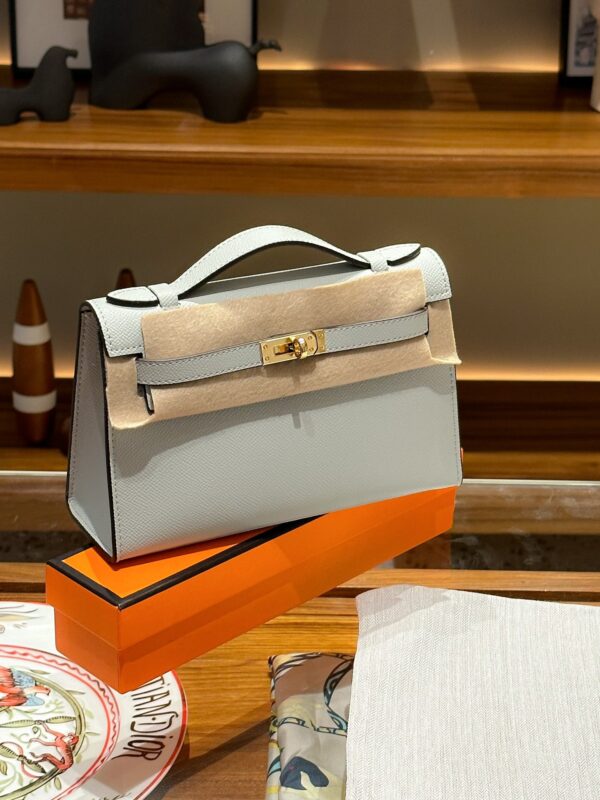
Burning Test
Tear off some fibers from the back of the leather and ignite them to observe the combustion and odor. Genuine leather emits a hair-like odor when burned and usually turns into powder after burning. Synthetic leather may emit a pungent odor and form lumps when burned.
Hardware Accessories Inspection
Hardware accessories are also an important criterion for judging the quality of genuine leather bags. High-quality genuine leather bags usually have hardware accessories that are shiny, thick, and flawless. Particularly for components like zippers, those from good factories feel smooth and strong when pulled.
In summary, by observing appearance, experiencing touch, identifying odors, conducting physical tests, performing burning tests, and inspecting hardware accessories, one can relatively accurately identify the authenticity of genuine leather bags. When purchasing genuine leather bags, consumers are advised to choose reputable merchants and brands to ensure they are buying genuine products.(http://wonderfulladies.com)